
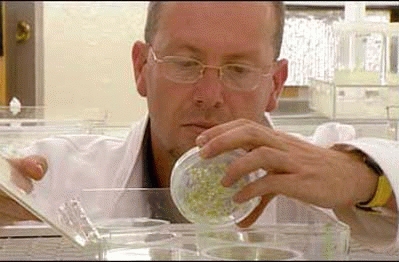
ALIMENTOS TRASGÉNICOS “La Noche Temática” "LA AVENTURA DE COMER" continúa con el documental “¿Qué hay de comer?” (The future of food), una producción estadounidense, de 57 minutos de  duración, realizada por Deborah Koons García y producida por Roco Films International, que analiza el futuro de la alimentación, sobre todo a partir de la aparición de la ingeniería genética, que ha revolucionado la producción de alimentos. El aumento en el uso de fertilizantes, pesticidas y herbicidas está alterando muchos productos y en algunos casos poniendo en riesgo nuestra salud. En este aspecto la empresa Monsanto sigue siendo la más cuestionada. Se trata de una multinacional de agricultura y biotecnología, la líder mundial en la producción del herbicida glifosato, vendido bajo la marca Roundup. Además, esta empresa también es líder en la producción de semillas genéticamente modificadas –transgénicos-. Sus productos y sus agresivas prácticas legales (y de lobby) han hecho de Monsanto un blanco primario del movimiento anti-globalización de activistas ambientales y organizaciones como Greenpeace. A través de archivos, entrevistas a agricultores y expertos en la materia, este documental analiza cómo en los últimos diez años, la ingeniería genética ha modificado los métodos de cultivo y la agricultura de gran parte del mundo y ha favorecido la aparición de nuevos productos en el mercado, en muchos casos cuestionados.
Publication details Download Publisher Mill Valley, EUA : Lily Films, Nueva York, EUA : Arts Alliance America [dist.]
Repository Acervo General - ITESO (Mexico) Language eng
Keywords 664. 024 KOO V. 1, Científicos Húngaros - Entrevistas, Transnacionales de EUA, Documentales, Cine Norteamericano - 2000-2009, Cine Norteamericano - Siglo XXI, Cine de Mujeres - EUA, Cine en Video - EUA, Semillas Transgénicas, Alimentos Transgénicos - Tema Principal, Alimentos y Bebidas - Industria y Comercio, Alimentos y Bebidas - Aspectos Jurídicos, Maíz - México - Aspectos Sociales y Culturales, Agricultura, Desarrollo Sustentable, Conservación y Protección Ambiental, Tecnología de Alimentos, Ingeniería Química, Ingeniería Genética, Biotecnología, Abasto de Alimentos, Política Alimentaria, Economía de la Tierra, Economía Internacional, Globalización, Oaxaca en el Cine, México en el Cine, Hansen, Michael, Pusztai, Arpád, Monsanto
* Cultivo de maíz transgénico. Greenpeace: La coexistencia sigue siendo imposible
 duración, realizada por Deborah Koons García y producida por Roco Films International, que analiza el futuro de la alimentación, sobre todo a partir de la aparición de la ingeniería genética, que ha revolucionado la producción de alimentos. El aumento en el uso de fertilizantes, pesticidas y herbicidas está alterando muchos productos y en algunos casos poniendo en riesgo nuestra salud. En este aspecto la empresa Monsanto sigue siendo la más cuestionada. Se trata de una multinacional de agricultura y biotecnología, la líder mundial en la producción del herbicida glifosato, vendido bajo la marca Roundup. Además, esta empresa también es líder en la producción de semillas genéticamente modificadas –transgénicos-. Sus productos y sus agresivas prácticas legales (y de lobby) han hecho de Monsanto un blanco primario del movimiento anti-globalización de activistas ambientales y organizaciones como Greenpeace. A través de archivos, entrevistas a agricultores y expertos en la materia, este documental analiza cómo en los últimos diez años, la ingeniería genética ha modificado los métodos de cultivo y la agricultura de gran parte del mundo y ha favorecido la aparición de nuevos productos en el mercado, en muchos casos cuestionados.
.The Future of Food (2004) * Koons Garcia, Deborah (realización), * Koons, Deborah (guión), * Chater, John (fotografía), * Gilliam, Vivien Hillgrove (montaje), * Boekelheide, Todd (música), * Maamouri, Sara (conducción), * Hansen, Michael, * Pusztai, Arpád, * Koons, Deborah (entrevista)
Publication details Download Publisher Mill Valley, EUA : Lily Films, Nueva York, EUA : Arts Alliance America [dist.]
Repository Acervo General - ITESO (Mexico) Language eng
Keywords 664. 024 KOO V. 1, Científicos Húngaros - Entrevistas, Transnacionales de EUA, Documentales, Cine Norteamericano - 2000-2009, Cine Norteamericano - Siglo XXI, Cine de Mujeres - EUA, Cine en Video - EUA, Semillas Transgénicas, Alimentos Transgénicos - Tema Principal, Alimentos y Bebidas - Industria y Comercio, Alimentos y Bebidas - Aspectos Jurídicos, Maíz - México - Aspectos Sociales y Culturales, Agricultura, Desarrollo Sustentable, Conservación y Protección Ambiental, Tecnología de Alimentos, Ingeniería Química, Ingeniería Genética, Biotecnología, Abasto de Alimentos, Política Alimentaria, Economía de la Tierra, Economía Internacional, Globalización, Oaxaca en el Cine, México en el Cine, Hansen, Michael, Pusztai, Arpád, Monsanto
* Cultivo de maíz transgénico. Greenpeace: La coexistencia sigue siendo imposible


 m without shame
 .
. the one of


